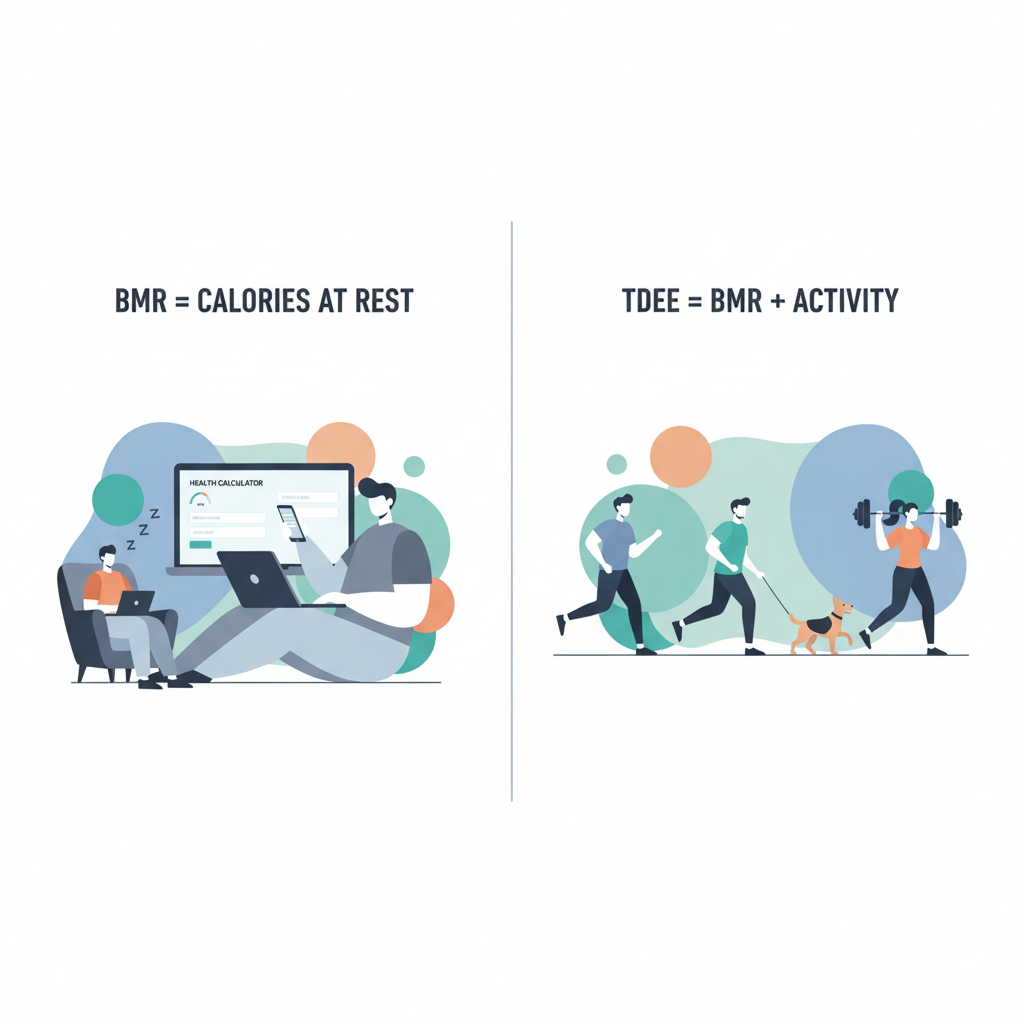
Understanding your body’s energy needs starts with knowing your Basal Metabolic Rate. Your BMR represents the calories your body burns at complete rest. This fundamental measurement helps you plan diet and exercise strategies effectively.
Our free BMR Calculator provides instant, accurate results. No registration required. Calculate your metabolic rate in seconds and start your health journey today.

What Is Basal Metabolic Rate (BMR)?
Basal Metabolic Rate represents the minimum energy your body needs to maintain vital functions. These functions include breathing, circulation, cell production, and nutrient processing. Your BMR accounts for the largest portion of your daily energy expenditure.
Think of BMR as your body’s idle energy consumption. Even when sleeping, your body works constantly. Your heart pumps blood. Your lungs process oxygen. Your brain manages countless automatic functions. All these processes require energy.
The basal metabolic rate varies significantly between individuals. Several factors influence your metabolic rate. Age, gender, body composition, and genetics all play crucial roles. Understanding these factors helps explain why different people have different calorie needs.
Your muscle mass significantly impacts your BMR. Muscle tissue burns more calories than fat tissue, even at rest. This explains why individuals with higher muscle mass typically have higher metabolic rates. Building muscle mass through exercise can increase your resting metabolic rate over time.

Why BMR Matters for Your Health
Knowing your basal metabolic rate provides critical information for weight management. Whether you want to lose weight, gain weight, or maintain your current weight, BMR serves as your foundation. This measurement helps you understand your minimum calorie requirements.
Many people underestimate or overestimate their calorie needs. This miscalculation leads to ineffective diet plans. Using a BMR calculator eliminates guesswork. You get personalized data specific to your body characteristics.
Important Note: Your BMR represents only resting energy expenditure. Your total daily energy needs include physical activity and other factors. We’ll explore this difference in detail throughout this article.
How the BMR Calculator Works
The BMR calculator uses scientifically validated formulas to estimate your metabolic rate. The most common formula is the Mifflin-St Jeor equation. This equation considers your age, gender, weight, and height to calculate your basal metabolic rate accurately.
Mifflin-St Jeor Equation for Men
BMR = (10 × weight in kg) + (6.25 × height in cm) – (5 × age in years) + 5
Mifflin-St Jeor Equation for Women
BMR = (10 × weight in kg) + (6.25 × height in cm) – (5 × age in years) – 161
These formulas account for the physiological differences between men and women. Men typically have higher BMR values due to greater muscle mass and lower body fat percentages. The equations adjust for these biological differences.

Factors the Calculator Considers
Weight
Your body weight directly influences energy expenditure. Heavier bodies require more energy to maintain basic functions. Every kilogram of body mass contributes to your basal metabolic rate calculation.
Height
Taller individuals typically have higher BMR values. Height correlates with body surface area. Greater surface area means more cells requiring energy for maintenance and temperature regulation.
Age
Metabolic rate naturally decreases with age. This decline begins around age 30. Hormonal changes and muscle mass loss contribute to this gradual reduction in basal metabolic rate over time.
Gender
Biological sex significantly affects metabolism. Men generally have 5-10% higher BMR than women. This difference stems from hormonal variations and typical body composition differences between genders.
Alternative BMR Formulas
While the Mifflin-St Jeor equation is most commonly used, other formulas exist. The Harris-Benedict equation was the previous standard. The Katch-McArdle formula considers body fat percentage for increased accuracy. Each formula has specific applications.
Formula Accuracy: Research shows the Mifflin-St Jeor equation provides the most accurate results for most people. The formula achieves approximately 90% accuracy for individuals within normal weight ranges.
How to Use the BMR Calculator: Step-by-Step Guide
Using our BMR calculator is straightforward. Follow these simple steps to get your personalized basal metabolic rate. The entire process takes less than one minute. Accurate input data ensures reliable results.
- Enter your current weight in kilograms. Use a reliable scale for accurate measurement. Weigh yourself in the morning before eating for consistency.
- Input your height in centimeters. Stand straight against a wall for proper measurement. Remove shoes for accuracy.
- Enter your age in years. Use your current age, not your birth year. The calculator needs your age to account for metabolic changes.
- Select your biological gender. This information affects the formula calculation. Choose the gender assigned at birth for accurate results.
- Click the Calculate button. The calculator processes your information instantly. Your BMR appears within seconds.

Tips for Accurate Measurements
The accuracy of your BMR calculation depends on precise input data. Small measurement errors can affect your results. Take time to gather accurate information before using the calculator.
- Weigh yourself at the same time each day for consistency
- Use digital scales for precise weight measurements
- Measure height without shoes on a flat surface
- Double-check all entered values before calculating
- Update your calculations every few months as your body changes
Calculate Your TDEE Next
Now that you know your BMR, discover your Total Daily Energy Expenditure. TDEE includes your activity level for complete calorie planning.
Understanding Your BMR Results
Your BMR result appears as a number representing daily calories. This value indicates the energy your body burns at complete rest. Understanding this number helps you make informed decisions about diet and exercise.

What the Numbers Mean
A typical BMR for women ranges from 1200-1500 calories daily. Men usually see results between 1500-1800 calories. These ranges vary based on individual characteristics. Your specific result reflects your unique body composition and metabolic rate.
Higher BMR values indicate faster metabolism. Your body burns more calories at rest. Lower BMR values suggest slower metabolic rate. Neither high nor low is inherently better. Both simply indicate your body’s energy needs.
Factors Affecting Your BMR Results
Body Composition Impact
Muscle tissue dramatically affects your metabolic rate. Each pound of muscle burns approximately 6 calories daily at rest. Fat tissue burns only 2 calories per pound. Building muscle increases your basal metabolic rate naturally.
Body composition matters more than total weight. Two people with identical weight can have vastly different BMR values. The person with more muscle mass will have a higher metabolic rate.
Age-Related Changes
Your basal metabolic rate decreases approximately 2% per decade after age 30. This decline occurs due to muscle loss and hormonal changes. Regular strength training helps counteract age-related metabolic slowdown.
Younger individuals naturally have higher metabolic rates. Growth and development require significant energy. As you age, maintaining muscle mass becomes increasingly important for metabolic health.
BMR Ranges by Demographics
| Age Group | Men BMR Range | Women BMR Range | Key Factors |
| 18-30 years | 1600-1900 calories | 1300-1500 calories | Peak metabolic rate, high muscle mass |
| 31-50 years | 1500-1800 calories | 1200-1400 calories | Gradual decline, lifestyle impact |
| 51-70 years | 1400-1700 calories | 1100-1300 calories | Hormonal changes, muscle loss |
| 70+ years | 1300-1600 calories | 1000-1200 calories | Reduced activity, lower muscle mass |
Medical Considerations: Certain health conditions affect metabolic rate. Thyroid disorders, diabetes, and hormonal imbalances can significantly alter your BMR. Consult healthcare professionals if your results seem unusually high or low.
Using BMR for Weight Management
Your basal metabolic rate forms the foundation of any weight management plan. This knowledge empowers you to make informed nutritional choices. Understanding your metabolic rate eliminates guesswork from calorie planning.

BMR and Weight Loss
Creating a calorie deficit leads to weight loss. Your body uses stored fat for energy when calorie intake falls below expenditure. However, eating below your BMR is generally not recommended. This approach can slow metabolism and cause muscle loss.
The safe approach involves eating slightly above your BMR while increasing physical activity. This strategy maintains metabolic rate while creating necessary calorie deficit. Most experts recommend a deficit of 500 calories daily for healthy weight loss.
Calculating Your Weight Loss Calories
Start with your BMR value. Multiply it by your activity factor to get TDEE. Subtract 500 calories from your TDEE for gradual weight loss. This creates approximately one pound of fat loss weekly.
Never drop below your BMR significantly. Your body needs these minimum calories for essential functions. Severe calorie restriction triggers survival mechanisms. Your metabolism slows to conserve energy.
- Calculate your accurate BMR first
- Determine your TDEE based on activity level
- Create moderate calorie deficit (500-750 calories)
- Monitor progress and adjust as needed
- Maintain adequate protein intake
Safe Weight Loss: Aim for 0.5-1 kg loss per week. Faster weight loss often includes muscle loss. Preserve muscle mass for better metabolic health.
BMR and Weight Gain
Gaining weight requires a calorie surplus. Consume more calories than your body burns daily. Focus on quality nutrition rather than empty calories. Combine surplus with strength training for muscle gain instead of fat.
Add 300-500 calories above your TDEE for gradual weight gain. This approach minimizes excess fat gain. Track your progress weekly and adjust intake accordingly. Quality muscle gain occurs slowly and requires patience.
Healthy Weight Gain Strategies
- Increase calorie intake gradually above TDEE
- Focus on nutrient-dense whole foods
- Combine with resistance training program
- Consume adequate protein for muscle building
- Track progress and adjust intake weekly
- Stay consistent with meal timing
Avoid These Weight Gain Mistakes
- Adding too many calories too quickly
- Relying on processed junk foods
- Skipping strength training exercises
- Ignoring protein requirements
- Inconsistent eating patterns
- Not monitoring body composition changes
BMR and Weight Maintenance
Maintaining current weight requires calorie balance. Consume calories equal to your total daily energy expenditure. Your BMR plus activity calories equals your maintenance intake. This balance keeps weight stable.
Weight maintenance allows flexibility. Small daily variations are normal and acceptable. Monitor your weight weekly. Adjust intake if you notice consistent upward or downward trends. Maintenance is an active process requiring attention.
Calculate Your Daily Calorie Needs
Discover your complete daily calorie requirements including activity levels. Get personalized nutrition targets for your goals.
BMR vs TDEE: Understanding the Difference
Many people confuse Basal Metabolic Rate with Total Daily Energy Expenditure. These measurements serve different purposes. Understanding both provides complete insight into your calorie needs.

What is TDEE?
Total Daily Energy Expenditure represents all calories you burn daily. TDEE includes your BMR plus all physical activity. This measurement accounts for exercise, daily movement, and even digestion. TDEE provides your actual daily calorie needs.
TDEE varies significantly based on lifestyle. Sedentary individuals burn fewer calories than active people. Your job, exercise routine, and daily habits all influence your TDEE. This variability makes TDEE more practical for nutrition planning.
BMR Components
- Basic organ functions and cellular processes
- Breathing and cardiovascular system operation
- Nervous system activity and brain function
- Protein synthesis and cell regeneration
- Body temperature regulation at rest
TDEE Additional Components
- Planned exercise and workout activities
- Daily movement and non-exercise activity
- Digestion and food processing (thermic effect)
- Occupational physical demands
- Spontaneous physical movements
Calculating TDEE from BMR
Converting BMR to TDEE requires an activity multiplier. These multipliers account for different lifestyle activity levels. Choose the multiplier that best matches your daily routine. Honesty about activity level ensures accurate results.
| Activity Level | Description | Multiplier | TDEE Calculation |
| Sedentary | Little or no exercise, desk job | 1.2 | BMR × 1.2 |
| Lightly Active | Light exercise 1-3 days per week | 1.375 | BMR × 1.375 |
| Moderately Active | Moderate exercise 3-5 days per week | 1.55 | BMR × 1.55 |
| Very Active | Hard exercise 6-7 days per week | 1.725 | BMR × 1.725 |
| Extremely Active | Very hard exercise, physical job | 1.9 | BMR × 1.9 |
Practical Example
Consider a 30-year-old woman with a BMR of 1400 calories. She exercises moderately 4 times weekly. Her activity multiplier is 1.55. Her TDEE calculation: 1400 × 1.55 = 2170 calories daily. This represents her complete calorie needs.
For weight loss, she would eat below 2170 calories. For weight gain, she would eat above this number. For maintenance, she would target approximately 2170 calories daily. Her BMR of 1400 represents only the baseline.
Key Insight: Never eat below your BMR for extended periods. Always base your calorie targets on TDEE, not BMR. Your body needs BMR calories for essential functions regardless of weight goals.
Calculate Your Complete Daily Energy Needs
Move beyond BMR and discover your Total Daily Energy Expenditure. Get accurate calorie targets based on your activity level.
Factors That Affect Your Metabolic Rate
Numerous factors influence your basal metabolic rate beyond basic demographics. Some factors you can control through lifestyle changes. Others remain fixed by genetics and biology. Understanding these influences helps optimize your metabolism.

Controllable Factors
Muscle Mass
Muscle tissue significantly elevates metabolic rate. Every pound of muscle burns approximately 6 calories daily at rest. Building muscle through resistance training increases your BMR permanently. This makes strength training crucial for metabolism.
Physical Activity
Regular exercise influences resting metabolic rate beyond immediate calorie burn. High-intensity training elevates metabolism for hours post-workout. Consistent activity prevents age-related metabolic decline. Movement patterns throughout the day matter significantly.
Diet Composition
Food choices affect your metabolic rate through the thermic effect. Protein requires more energy to digest than carbohydrates or fats. Adequate protein intake supports muscle maintenance. Extreme calorie restriction slows metabolism as protective response.
Biological and Genetic Factors
Some metabolic factors remain beyond direct control. Genetics determine baseline metabolic rate to some extent. However, lifestyle choices still significantly impact overall metabolism. Understanding fixed factors helps set realistic expectations.
- Gender differences in hormone profiles and body composition
- Age-related decline in metabolic rate over time
- Genetic variations in metabolic efficiency
- Ethnic background and ancestral adaptations
- Natural body type and frame size

Medical Conditions Affecting Metabolism
Certain health conditions significantly alter metabolic rate. Thyroid disorders represent the most common metabolic condition. Hypothyroidism slows metabolism while hyperthyroidism accelerates it. Other hormonal imbalances also impact energy expenditure.
Conditions That Lower BMR
- Hypothyroidism and thyroid dysfunction
- Insulin resistance and diabetes
- Polycystic ovary syndrome (PCOS)
- Chronic stress and cortisol imbalance
- Sleep disorders and chronic fatigue
- Extreme calorie restriction damage
Conditions That Raise BMR
- Hyperthyroidism and thyroid overactivity
- Chronic fever and infections
- Some types of cancer
- Chronic inflammatory conditions
- Certain medications and supplements
- Pregnancy and breastfeeding periods
Environmental Factors
Your environment influences metabolic rate in subtle ways. Temperature exposure affects energy expenditure for body temperature regulation. Cold environments increase calorie burn. Hot climates also elevate metabolism slightly through cooling mechanisms.
Altitude impacts metabolic rate as well. Higher elevations require increased energy for basic functions. Your body works harder to obtain adequate oxygen. These environmental effects usually remain modest but measurable.
Medical Consultation: Unexplained weight changes despite proper diet and exercise may indicate metabolic disorders. Consult healthcare providers if you suspect metabolic issues. Blood tests can identify hormonal imbalances affecting metabolism.
Tips for Improving Your Metabolic Rate
While genetics set baseline metabolism, lifestyle choices significantly influence metabolic rate. Strategic interventions can boost your BMR naturally. These evidence-based approaches optimize your body’s calorie-burning capacity.

Build and Maintain Muscle Mass
Resistance training represents the most effective metabolism booster. Muscle tissue burns significantly more calories than fat tissue at rest. Adding muscle mass increases your BMR permanently. This elevation persists even during rest and sleep.
Focus on compound exercises targeting major muscle groups. Squats, deadlifts, push-ups, and rows build substantial muscle mass. Train with progressive overload, gradually increasing weight or resistance. Aim for 2-4 strength training sessions weekly for optimal results.
Best Exercises for Metabolism
- Heavy compound lifts (squats, deadlifts, presses)
- High-intensity interval training sessions
- Circuit training with minimal rest periods
- Bodyweight resistance exercises
- Progressive overload strength programs
Exercise Frequency Guidelines
- Strength training 2-4 times per week
- High-intensity workouts 1-3 times weekly
- Daily movement and walking activities
- Recovery days between intense sessions
- Consistency over workout intensity
Optimize Your Nutrition
Dietary choices profoundly impact metabolic rate. Protein consumption increases metabolism through higher thermic effect. Your body burns more calories digesting protein compared to fats or carbohydrates. Adequate protein also preserves muscle mass during calorie deficits.
Avoid extreme calorie restriction. Severe dieting triggers metabolic adaptation. Your body reduces energy expenditure to conserve energy. This survival mechanism makes weight loss increasingly difficult. Maintain moderate calorie deficits for sustainable results.
Protein Intake
Consume 1.6-2.2 grams of protein per kilogram of body weight daily. Higher protein intake supports muscle maintenance and increases metabolic rate through the thermic effect of food.
Meal Timing
While meal frequency has minimal impact on metabolism, consistent eating patterns help regulate energy. Don’t skip breakfast entirely. Spread protein intake throughout the day for optimal muscle protein synthesis.
Hydration
Adequate water intake supports metabolic processes. Dehydration can temporarily reduce metabolic rate. Drink at least 2-3 liters of water daily. Cold water may slightly increase calorie burn.
Prioritize Quality Sleep
Sleep quality and duration significantly affect metabolic health. Chronic sleep deprivation disrupts hormones regulating metabolism. Insufficient sleep increases cortisol and reduces growth hormone production. These changes negatively impact muscle mass and metabolic rate.
Aim for 7-9 hours of quality sleep nightly. Establish consistent sleep and wake times. Create a dark, cool sleeping environment. Poor sleep undermines all other metabolic optimization efforts. Sleep represents a non-negotiable factor in metabolic health.

Manage Stress Effectively
Chronic stress elevates cortisol levels. Prolonged cortisol elevation promotes muscle breakdown and fat storage. High stress also disrupts sleep and recovery. These factors collectively reduce metabolic rate over time.
Implement stress management techniques consistently. Practice meditation, deep breathing, or yoga. Engage in enjoyable physical activities. Maintain social connections. Stress management protects metabolic health as effectively as diet and exercise.
Metabolism Boost Reality: Supplements claiming to “boost metabolism” typically have minimal effects. Focus on proven strategies: build muscle, eat adequate protein, sleep well, manage stress. These fundamentals deliver sustainable results.
Track Your Progress
Monitor body composition changes rather than just weight. Measure strength gains and energy levels. Progress photos reveal changes that scales miss. Regular BMR recalculation helps adjust nutrition plans.
Set Realistic Goals
Metabolic improvements occur gradually over weeks and months. Don’t expect dramatic overnight changes. Small consistent improvements compound significantly over time. Patience produces lasting results.
Stay Consistent
Consistency matters more than perfection. Sustainable habits beat aggressive temporary efforts. Focus on building lifestyle patterns you can maintain long-term. Metabolic health requires ongoing commitment.
Resting Metabolic Rate vs Basal Metabolic Rate
Resting Metabolic Rate (RMR) and Basal Metabolic Rate often appear interchangeably. These terms describe similar but distinct measurements. Understanding the difference clarifies metabolic testing and calculations.
BMR represents energy expenditure under strictly controlled conditions. True BMR measurement requires fasting, resting in a darkened room, and complete physical inactivity. These stringent conditions ensure accurate baseline measurements. Clinical settings use these protocols for precise BMR testing.
RMR measures energy expenditure under less restrictive conditions. Resting metabolic rate testing allows normal daily activities before measurement. You don’t need fasting or complete darkness. RMR values typically run 10-20% higher than true BMR measurements.
Practical Note: Most online calculators estimate RMR rather than true BMR. The difference remains minimal for practical nutrition planning. Both measurements serve similar purposes in diet management.
Why the Distinction Matters
The BMR versus RMR distinction matters primarily in clinical and research settings. Medical professionals use precise BMR measurements for metabolic disorder diagnosis. Research studies require standardized BMR protocols for accurate comparisons.
For everyday health and fitness purposes, the distinction becomes less critical. Online calculators provide sufficient accuracy for nutrition planning. The 10-20% difference between BMR and RMR gets absorbed into daily calorie variation. Focus on consistent measurement rather than absolute precision.
| Aspect | Basal Metabolic Rate (BMR) | Resting Metabolic Rate (RMR) |
| Measurement Conditions | Strictly controlled, fasting, darkened room | Relaxed conditions, minimal restrictions |
| Testing Location | Clinical laboratory settings | Fitness centers, medical offices |
| Typical Values | Lower baseline measurement | 10-20% higher than BMR |
| Practical Use | Research, medical diagnosis | Fitness planning, nutrition guidance |
| Calculator Estimates | True BMR difficult to calculate | Most calculators estimate RMR |
Common BMR Calculator Mistakes to Avoid
Many people misuse BMR calculations in their fitness journeys. These common errors undermine weight management efforts. Understanding and avoiding these mistakes ensures better results from your BMR knowledge.

Eating Below Your BMR
The most dangerous mistake involves eating below your basal metabolic rate. Your BMR represents minimum energy needs for survival. Consuming fewer calories than your BMR forces your body into starvation mode. This triggers metabolic slowdown and muscle loss.
Always base calorie targets on TDEE, not BMR. Create deficits from total daily energy expenditure. This approach ensures adequate energy for basic functions. Your body maintains normal metabolic rate while still losing weight through activity calories.
Correct Calorie Approach
- Calculate TDEE from BMR and activity level
- Create moderate deficit from TDEE (not BMR)
- Maintain energy for essential body functions
- Preserve muscle mass during weight loss
- Support sustainable long-term results
Dangerous BMR Undereating
- Consuming calories below BMR values
- Forcing body into survival mode
- Triggering metabolic slowdown response
- Causing significant muscle mass loss
- Creating unsustainable extreme restrictions
Overestimating Activity Level
People frequently overestimate their physical activity when calculating TDEE. This inflation creates artificially high calorie targets. The resulting calorie surplus prevents weight loss or causes unwanted weight gain.
Be honest about your true activity level. Most people fit the sedentary or lightly active categories. Office workers typically qualify as sedentary even with occasional gym visits. Choose the activity multiplier that reflects your typical daily movement.
Ignoring Body Composition Changes
Your BMR changes as your body composition evolves. Weight loss reduces BMR because smaller bodies require less energy. Muscle gain increases BMR through higher metabolic tissue. Failing to recalculate BMR leads to inaccurate calorie targets.
Recalculate your BMR every 10-15 pounds of weight change. Update your calculations every 2-3 months during active body composition changes. Regular recalculation ensures your nutrition plan remains appropriate for your current body.
Calculation Frequency: Recalculate your BMR and adjust calorie targets every 10-15 pounds of weight change or every 2-3 months during active body recomposition. Your metabolic needs evolve with your body.
Expecting Immediate Results
BMR calculations provide guidelines, not guarantees. Individual metabolism varies from calculated estimates. Some people burn slightly more or fewer calories than calculations predict. Track actual results and adjust accordingly.
Give nutrition plans 2-4 weeks before making major adjustments. Body weight fluctuates daily from water retention, digestion, and other factors. Consistent trends over weeks reveal true progress better than daily measurements.
BMR Considerations for Special Populations
Certain populations require modified approaches to BMR calculations and applications. Standard formulas may not accurately represent metabolic rates for everyone. Understanding these special considerations ensures appropriate nutrition planning.

Athletes and Highly Active Individuals
Athletes often have significantly higher metabolic rates than standard calculations predict. Intense training increases muscle mass substantially. Greater muscle mass elevates BMR beyond typical calculations. Athletes also experience elevated post-exercise metabolism.
Active individuals should use higher activity multipliers when calculating TDEE. Consider using specialized equations designed for athletic populations. Monitor performance and recovery as indicators of adequate energy intake. Underfueling compromises training adaptations and performance.
Pregnant and Nursing Women
Pregnancy significantly increases energy requirements. Metabolic rate rises to support fetal development and physiological changes. Standard BMR calculations don’t account for these additional needs. Pregnant women require specialized nutritional guidance.
Breastfeeding further elevates daily energy expenditure. Milk production demands approximately 500 additional calories daily. Nursing mothers need higher calorie intake than BMR calculations suggest. Consult healthcare providers for appropriate pregnancy and lactation nutrition.
Pregnancy Note: Pregnant and nursing women should not use standard BMR calculators for diet planning. Consult healthcare providers and registered dietitians for appropriate nutritional guidance during these special physiological states.
Older Adults
Aging naturally reduces metabolic rate. Muscle mass decreases with age without intervention. Hormonal changes affect metabolism. Standard BMR formulas account for age but may underestimate the decline in very elderly individuals.
Older adults benefit from resistance training to maintain muscle mass. Adequate protein intake becomes increasingly important. Regular BMR recalculation helps adjust nutrition as metabolic needs evolve with aging. Focus on nutrient density rather than simply calories.
Individuals with Medical Conditions
Medical conditions significantly alter metabolic rate. Thyroid disorders, diabetes, and hormonal imbalances affect energy expenditure. Medications can also influence metabolism. Standard calculations may not reflect actual metabolic rate for these populations.
People with medical conditions should work with healthcare professionals for nutrition planning. Metabolic testing provides more accurate measurements than calculations. Treatment of underlying conditions may normalize metabolic rate over time.
| Population | BMR Considerations | Recommended Actions |
| Athletes | Higher muscle mass, elevated metabolism, increased needs | Use higher activity multipliers, monitor performance, consider sports dietitian consultation |
| Pregnant Women | Increased metabolic demands, fetal development needs | Consult healthcare provider, don’t restrict calories, focus on nutrient quality |
| Nursing Mothers | Milk production requires 500+ additional calories | Add 500 calories to TDEE, maintain adequate hydration, prioritize nutrition quality |
| Older Adults | Age-related muscle loss, hormonal changes, slower metabolism | Emphasize resistance training, increase protein intake, regular BMR updates |
| Medical Conditions | Altered metabolism from disease or medications | Work with healthcare team, consider metabolic testing, treat underlying conditions |
BMR Myths and Facts
Numerous myths surround metabolic rate and BMR calculations. These misconceptions lead to ineffective or harmful practices. Separating fact from fiction helps you make informed decisions about metabolism and weight management.

Myth: Eating Late Slows Your Metabolism
Many believe eating after certain hours slows metabolic rate. This myth persists despite contradicting scientific evidence. Your metabolism continues working 24 hours daily regardless of eating times. Total daily calorie intake matters more than meal timing.
Late-night eating becomes problematic only when it increases total calorie consumption. Poor food choices and excess calories cause weight gain, not the clock. Focus on total daily nutrition rather than arbitrary eating windows.
Myth: Skipping Meals Boosts Fat Burning
Some claim skipping meals accelerates fat loss by forcing the body to burn stored fat. While short-term fasting does tap into fat stores, skipping meals often backfires. Extreme hunger leads to overeating later. Metabolic rate may decrease with prolonged severe calorie restriction.
Regular, balanced meals support consistent energy and metabolism. Protein-rich meals throughout the day maintain muscle mass. Sustainable eating patterns produce better long-term results than extreme meal skipping.
Myth: Certain Foods Dramatically Boost Metabolism
Marketing claims promote various foods as metabolism boosters. Green tea, hot peppers, and apple cider vinegar supposedly create significant metabolic increases. Research shows these foods produce minimal effects. Any metabolic boost remains too small for meaningful weight loss.
Focus on overall diet quality rather than miracle foods. Adequate protein intake does increase metabolic rate through the thermic effect. Building muscle through exercise provides far greater metabolic benefits than any food or supplement.
Common Metabolism Myths
- Eating late at night slows metabolism
- Skipping breakfast destroys metabolic rate
- Certain foods dramatically boost metabolism
- Eating small frequent meals speeds metabolism
- You can’t change your metabolism
- Supplements effectively boost metabolic rate
Metabolism Facts
- Total daily calories matter most for weight
- Meal timing has minimal metabolic impact
- Building muscle substantially increases BMR
- Meal frequency doesn’t significantly affect metabolism
- Lifestyle changes effectively influence metabolism
- Proven methods: exercise, protein, sleep, stress management
Myth: You Can’t Change Your Metabolism
Some people believe metabolism is entirely genetic and unchangeable. While genetics influence baseline metabolic rate, lifestyle factors significantly impact metabolism. Building muscle, improving sleep, managing stress, and optimizing nutrition all enhance metabolic rate.
Metabolic improvements occur gradually over time. Consistent healthy habits compound to produce substantial changes. You possess more control over metabolism than many people realize.
Fact: Muscle Mass Increases BMR
Building muscle tissue demonstrably increases basal metabolic rate. This represents one of the most effective metabolism boosters. Every pound of muscle burns approximately 6 calories daily at rest. Significant muscle gain produces meaningful BMR increases.
Resistance training creates lasting metabolic benefits. Unlike cardio exercise that burns calories only during activity, muscle mass elevates metabolism continuously. This makes strength training essential for long-term metabolic health.
Frequently Asked Questions About BMR Calculator
What is a good BMR for my age?
A “good” BMR varies significantly based on individual characteristics beyond age. For women aged 25-45, typical BMR ranges from 1200-1500 calories. Men in the same age range usually see 1500-1800 calories. These ranges depend heavily on height, weight, and muscle mass. Rather than comparing to others, focus on your individual BMR as your metabolic baseline. Higher or lower values aren’t inherently better or worse.
How accurate are BMR calculators?
BMR calculators using the Mifflin-St Jeor equation achieve approximately 90% accuracy for most people. Individual metabolism varies slightly from calculations. Factors like genetics, body composition, and medical conditions create variations. For practical nutrition planning, calculator estimates provide sufficient accuracy. If you need precise measurements, metabolic testing through indirect calorimetry offers clinical accuracy.
Should I eat exactly my BMR calories?
No, never eat exactly your BMR calories. Your BMR represents only resting energy expenditure. You need additional calories for daily activities, exercise, and food digestion. Calculate your TDEE by multiplying BMR by your activity factor. Base your calorie targets on TDEE, not BMR. Eating only BMR calories would create an excessive deficit that could slow metabolism and cause muscle loss.
Does BMR decrease with age?
Yes, basal metabolic rate naturally decreases with age. The decline begins around age 30 and continues throughout life. Metabolic rate drops approximately 2% per decade. This reduction occurs primarily due to muscle mass loss and hormonal changes. However, regular resistance training and adequate protein intake can minimize age-related metabolic decline. Maintaining muscle mass helps preserve higher BMR as you age.
Can I increase my BMR naturally?
Yes, you can naturally increase BMR through several evidence-based strategies. Building muscle mass through resistance training provides the most significant and lasting BMR increase. Each pound of muscle burns approximately 6 calories daily at rest. Adequate protein intake, quality sleep, stress management, and staying hydrated also support healthy metabolism. These lifestyle factors collectively elevate your metabolic rate over time.
What’s the difference between BMR and metabolism?
Metabolism is a broad term encompassing all chemical processes in your body. BMR specifically measures the energy required for basic survival functions at complete rest. BMR represents the largest component of total metabolism but isn’t the complete picture. Your total metabolism includes BMR plus energy for activity, exercise, and food digestion. Think of BMR as your baseline metabolism measurement.
How often should I recalculate my BMR?
Recalculate your BMR every 10-15 pounds of weight change or every 2-3 months during active body composition changes. Your BMR decreases with weight loss because smaller bodies require less energy. Conversely, building muscle increases BMR. Regular recalculation ensures your calorie targets remain appropriate for your current body. Update your calculations whenever you notice significant body composition changes.
Why is my BMR lower than my friend’s?
Multiple factors explain BMR differences between individuals. Body size, muscle mass, age, gender, and genetics all influence metabolic rate. Taller, heavier individuals typically have higher BMR values. Men usually have higher BMR than women due to greater muscle mass. Younger people generally have faster metabolism than older adults. These natural variations are normal and not concerning. Focus on your individual BMR rather than comparisons.
Can medications affect my BMR?
Yes, certain medications significantly affect metabolic rate. Thyroid medications directly alter metabolism by design. Some antidepressants, antipsychotics, and diabetes medications may slow metabolism as side effects. Stimulant medications can temporarily increase metabolic rate. Beta-blockers may reduce BMR slightly. If you take medications and notice unexplained weight changes, discuss potential metabolic effects with your healthcare provider.
Is BMR the same as calories burned per day?
No, BMR represents only resting energy expenditure, not total daily calorie burn. Your complete daily calorie expenditure is called TDEE (Total Daily Energy Expenditure). TDEE includes your BMR plus calories burned through physical activity, exercise, and food digestion. Most people burn 20-50% more calories than their BMR through daily activities. Always use TDEE, not BMR, for nutrition planning.
Does drinking water increase BMR?
Water consumption produces a small, temporary increase in metabolic rate called water-induced thermogenesis. Drinking cold water may slightly elevate calorie burn as your body warms the water to body temperature. However, this effect is minimal, burning only 8-10 calories per glass. While staying hydrated supports overall metabolic function, water itself isn’t a significant metabolism booster. Proper hydration remains important for general health regardless.
Can stress affect my BMR?
Chronic stress significantly impacts metabolic rate through hormonal changes. Prolonged stress elevates cortisol levels. High cortisol promotes muscle breakdown and fat storage, particularly abdominal fat. This hormonal imbalance can lower BMR over time. Stress also disrupts sleep quality, further compromising metabolism. Managing stress through relaxation techniques, adequate sleep, and healthy coping mechanisms helps maintain normal metabolic function.
Still Have Questions?
Explore our comprehensive health and fitness calculators for personalized nutrition planning and body composition analysis.
Conclusion: Making BMR Work for Your Health Goals
Understanding your Basal Metabolic Rate empowers informed health decisions. Your BMR provides the foundation for effective nutrition planning. This knowledge eliminates guesswork from calorie management and weight control strategies.
Remember that BMR represents only your baseline energy needs. Calculate your TDEE by factoring in daily activity and exercise. Base all nutrition decisions on total daily energy expenditure, not BMR alone. This approach ensures adequate energy for both survival functions and active living.

Focus on sustainable lifestyle changes rather than extreme interventions. Build muscle through resistance training. Consume adequate protein daily. Prioritize quality sleep and stress management. These evidence-based strategies naturally optimize your metabolic rate over time.
Recalculate your BMR regularly as your body changes. Update your nutrition plan every 10-15 pounds of weight change. Adjust calorie targets every 2-3 months during active body recomposition. Responsive planning ensures continued progress toward your goals.
Use BMR knowledge as a tool, not an obsession. Your calculated BMR provides guidance, not absolute truth. Individual metabolism varies slightly from mathematical estimates. Track actual results and adjust based on real-world outcomes. Listen to your body’s signals while using calculations as helpful guidelines.
Start your metabolic journey today with our free BMR calculator. Discover your personalized energy needs. Take the first step toward informed, effective health management. Your body’s metabolic rate holds the key to sustainable weight management and improved wellness.

Calculate Your TDEE
Discover your complete daily calorie needs including activity levels. Get personalized targets for your specific lifestyle and goals.

Find Your Macros
Calculate optimal protein, carbohydrate, and fat distribution. Personalize your nutrition based on your body and fitness objectives.

Analyze Body Composition
Understand your body fat percentage and muscle mass distribution. Track meaningful changes beyond simple scale weight.